Wine Vinegars
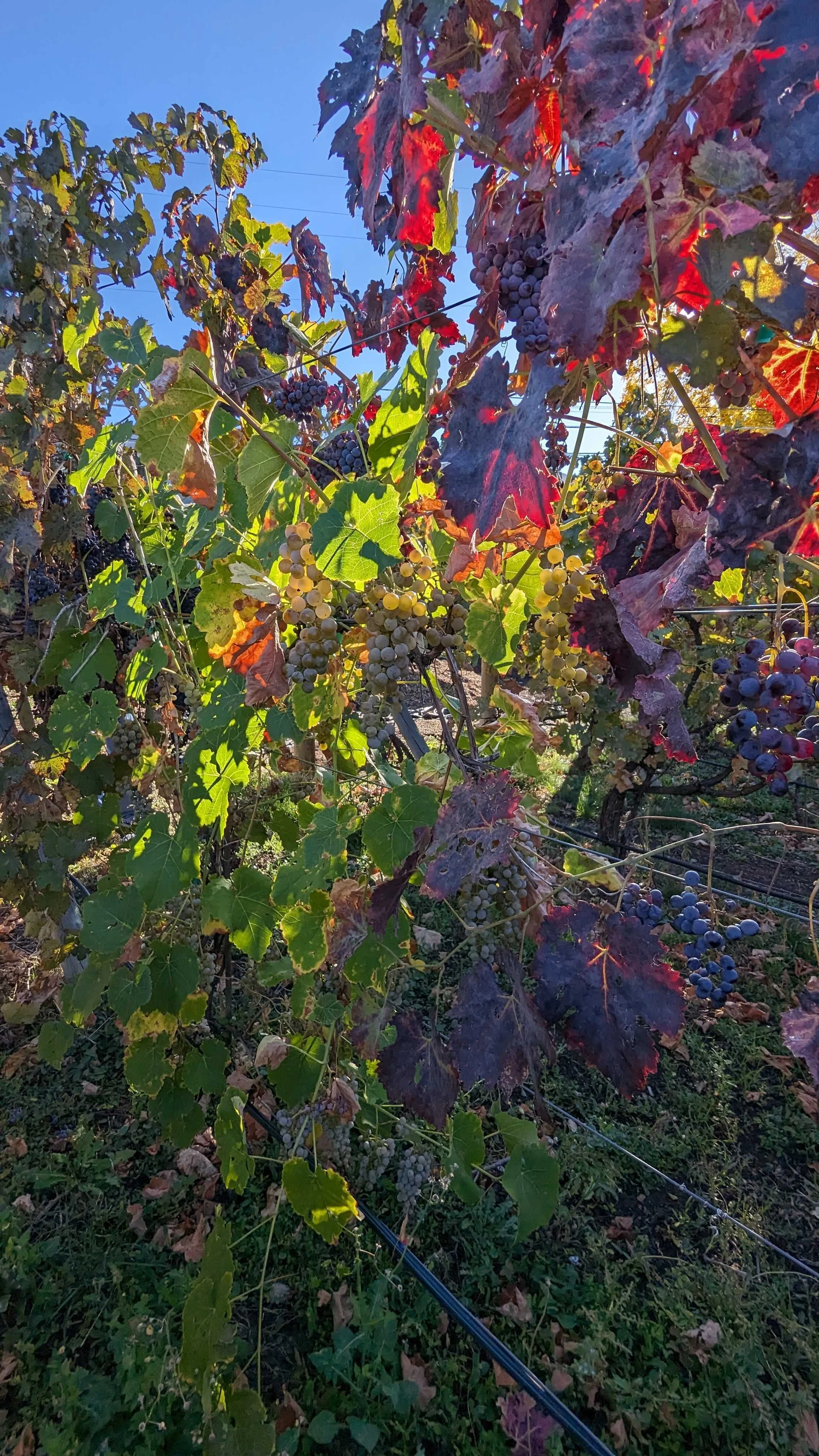
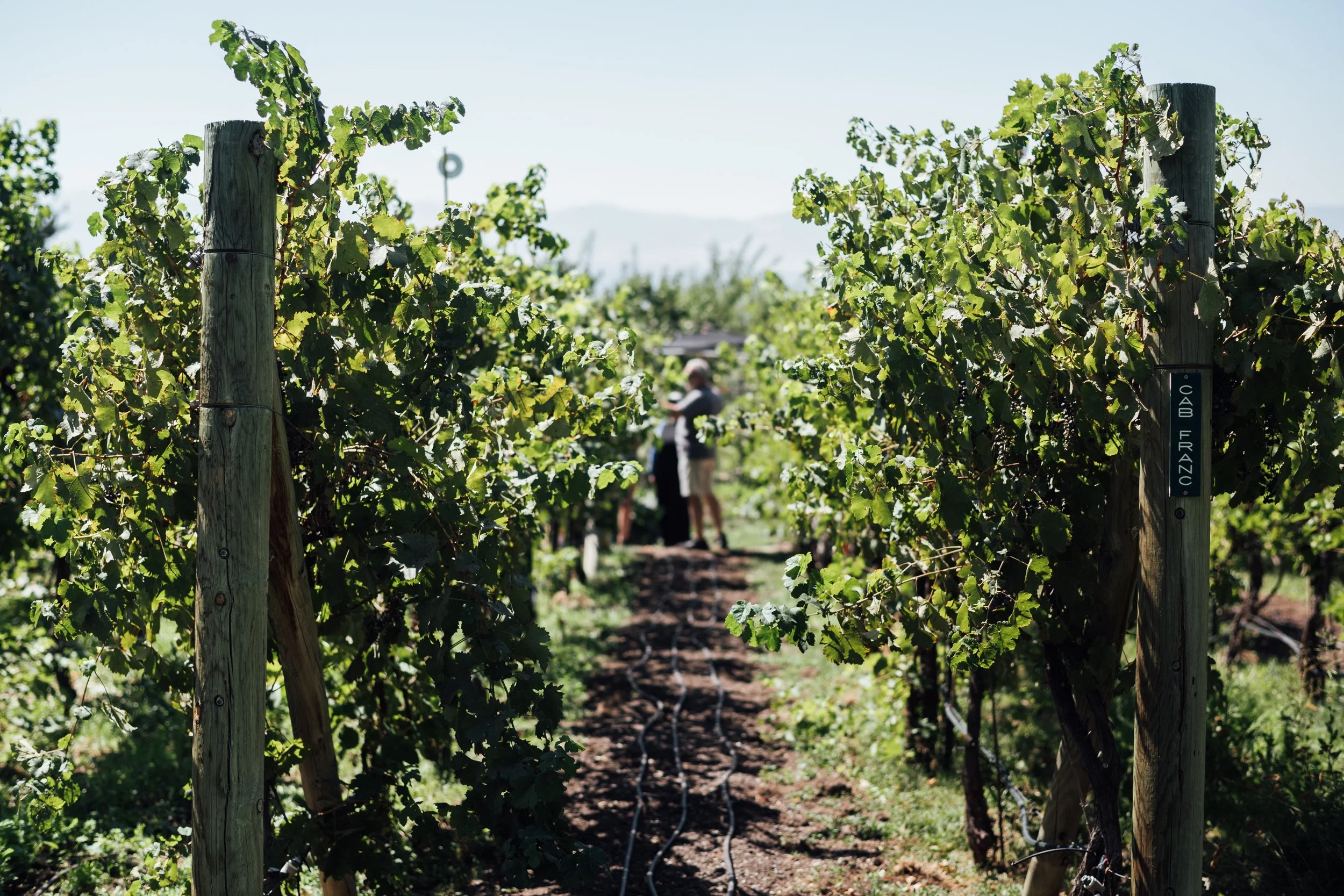
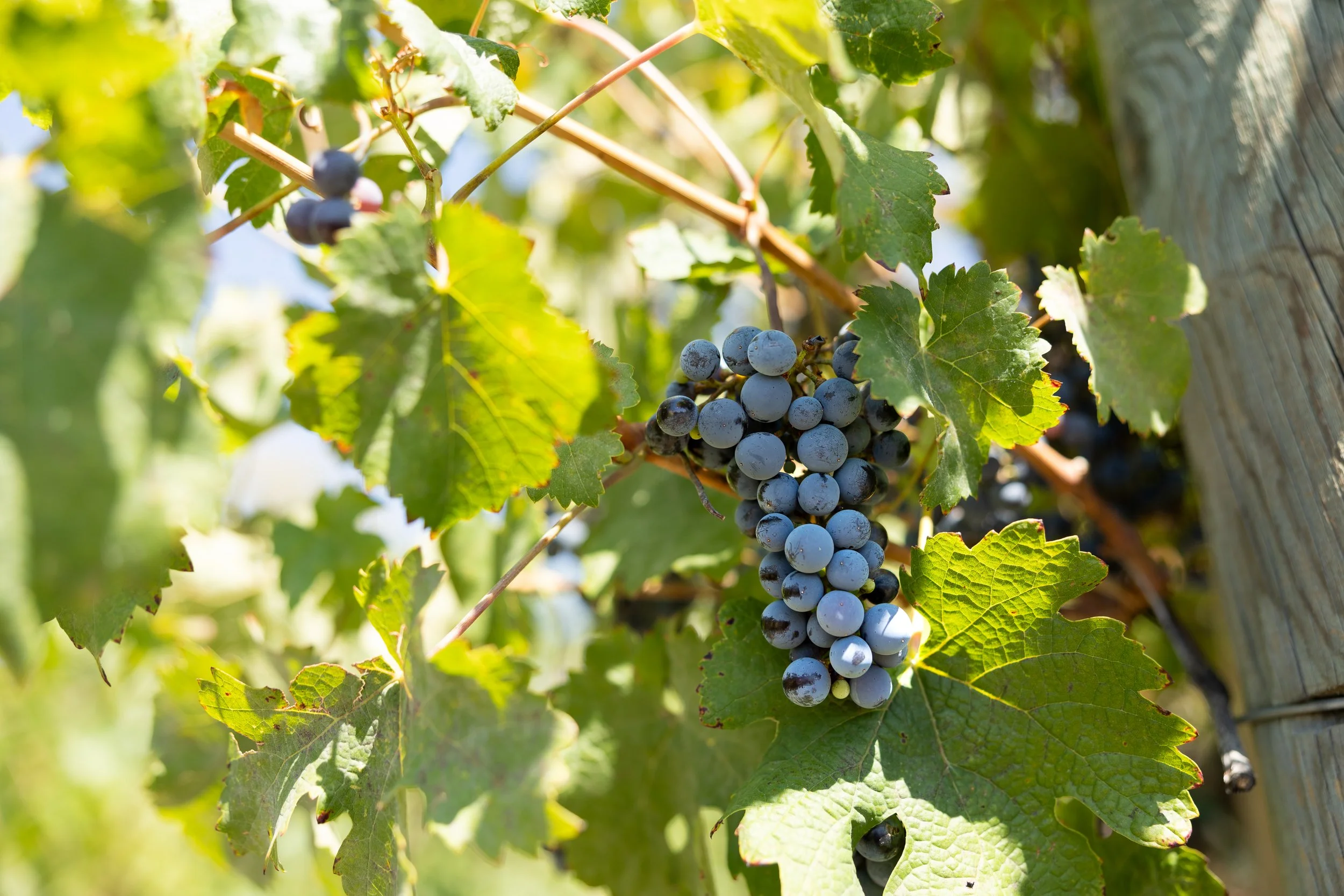
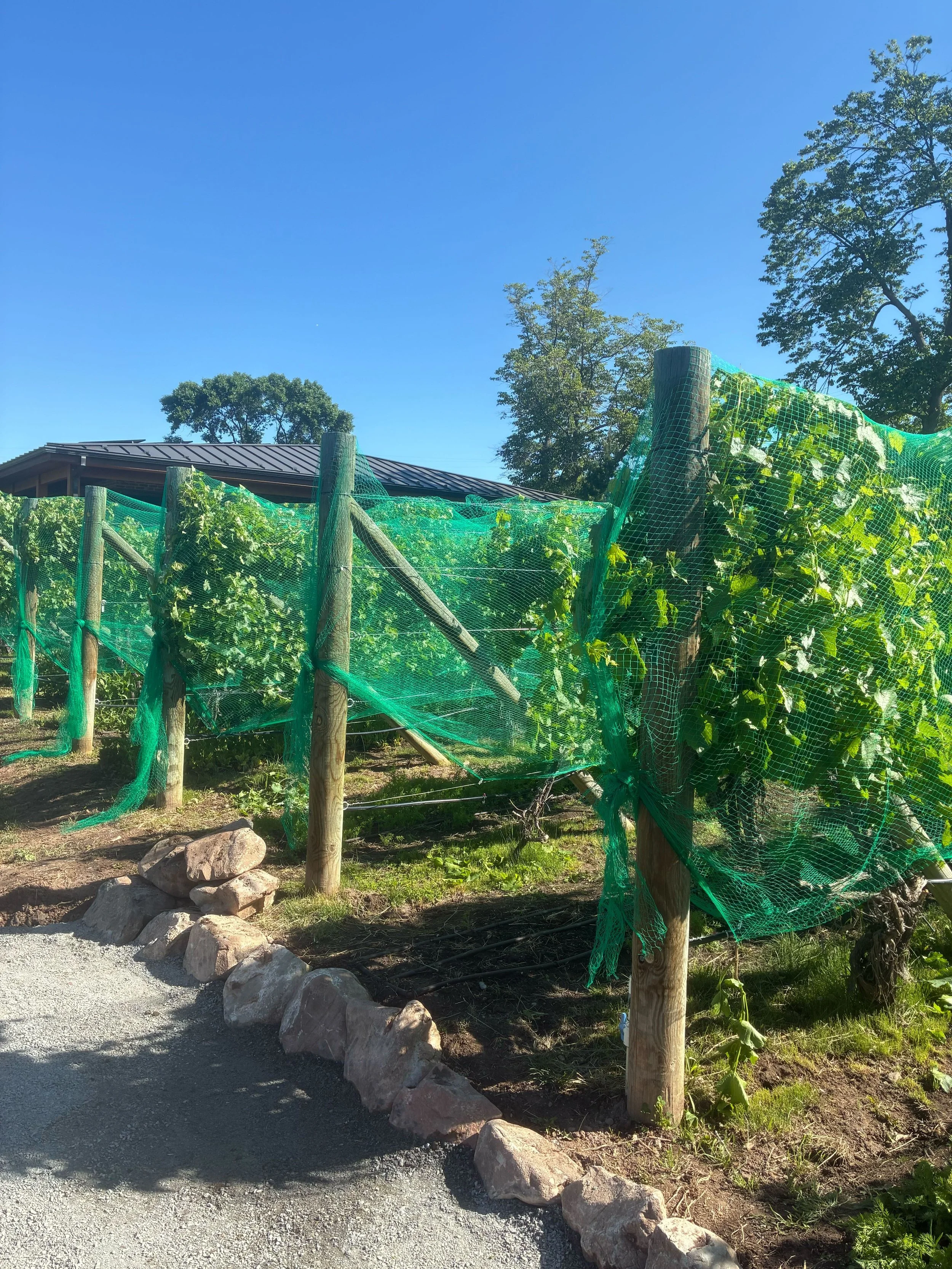
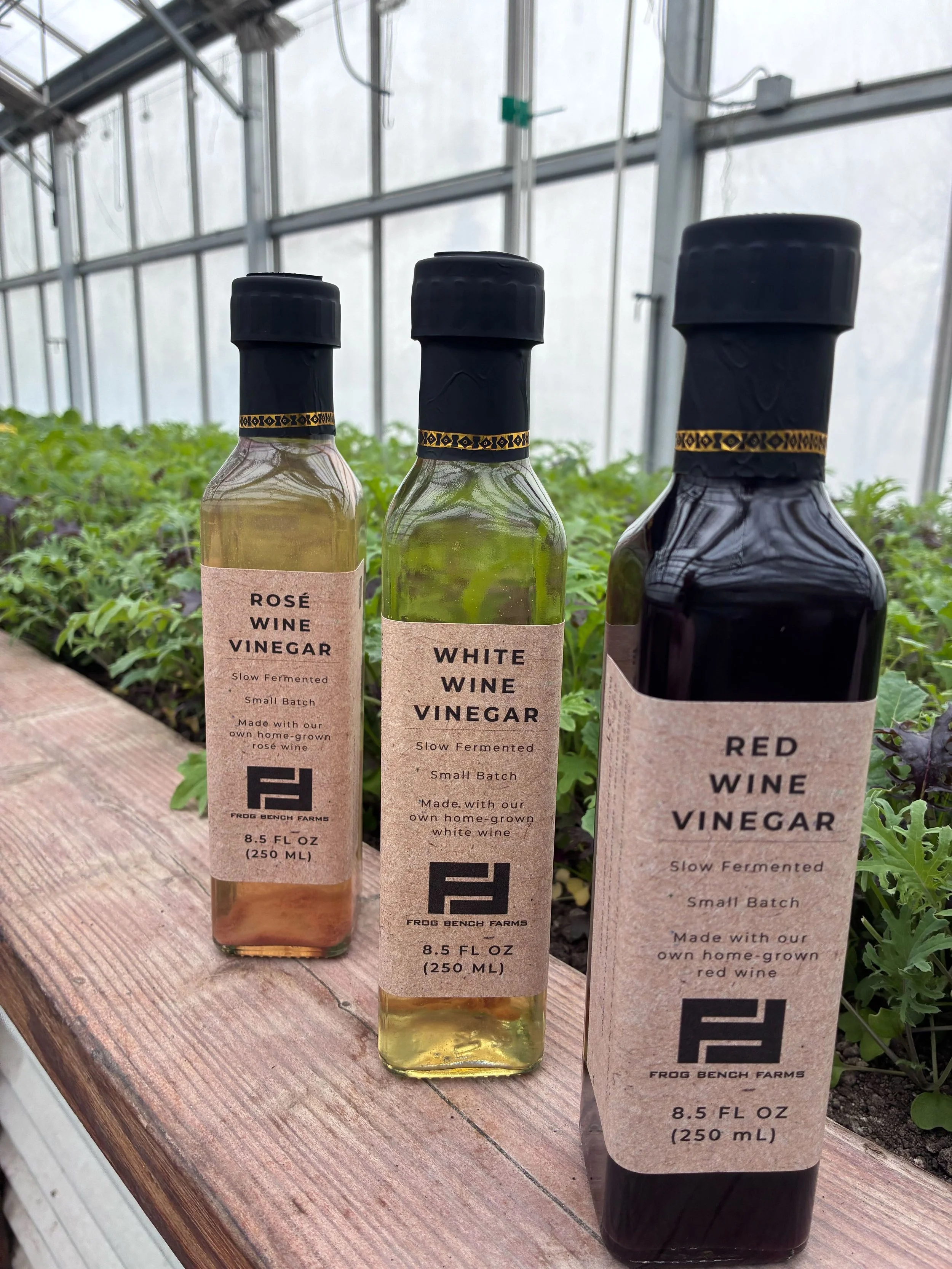
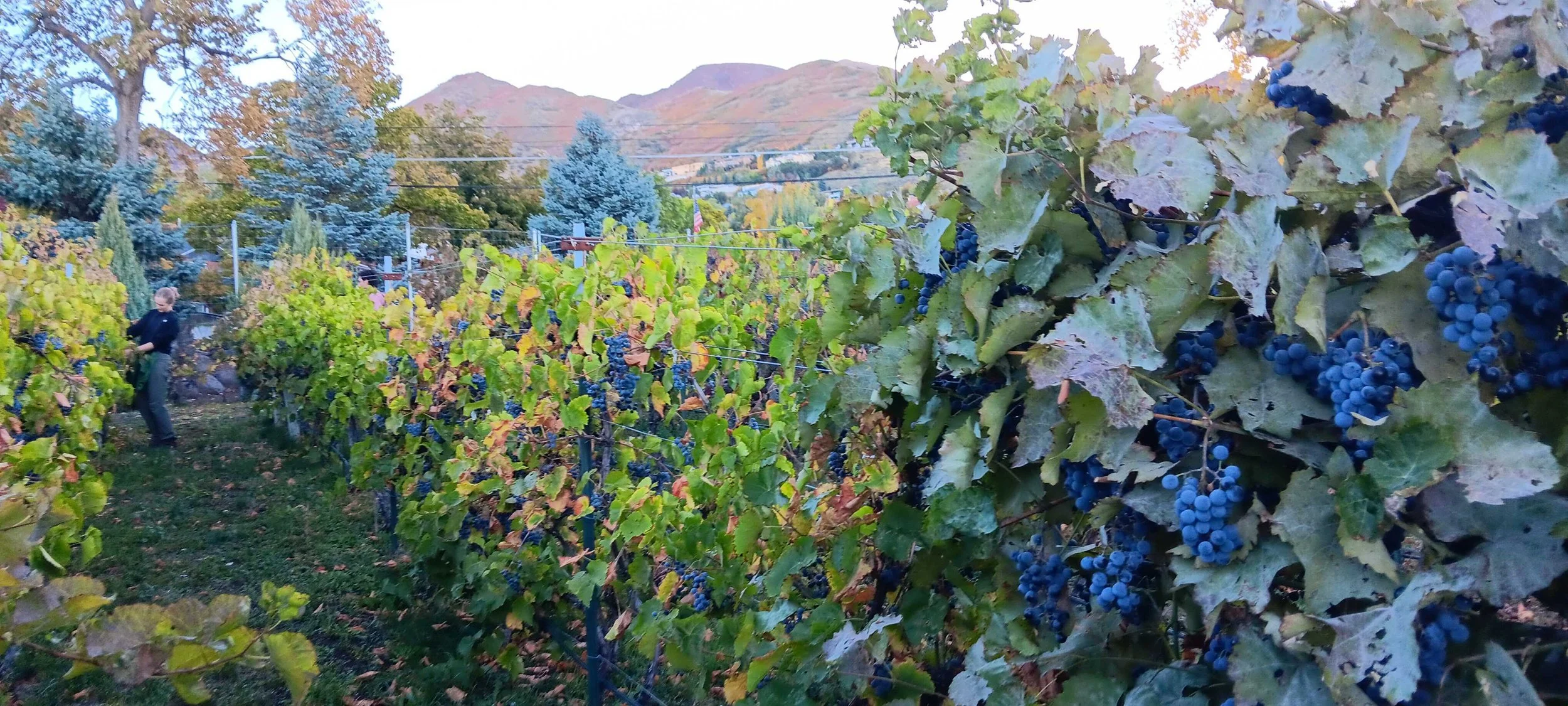
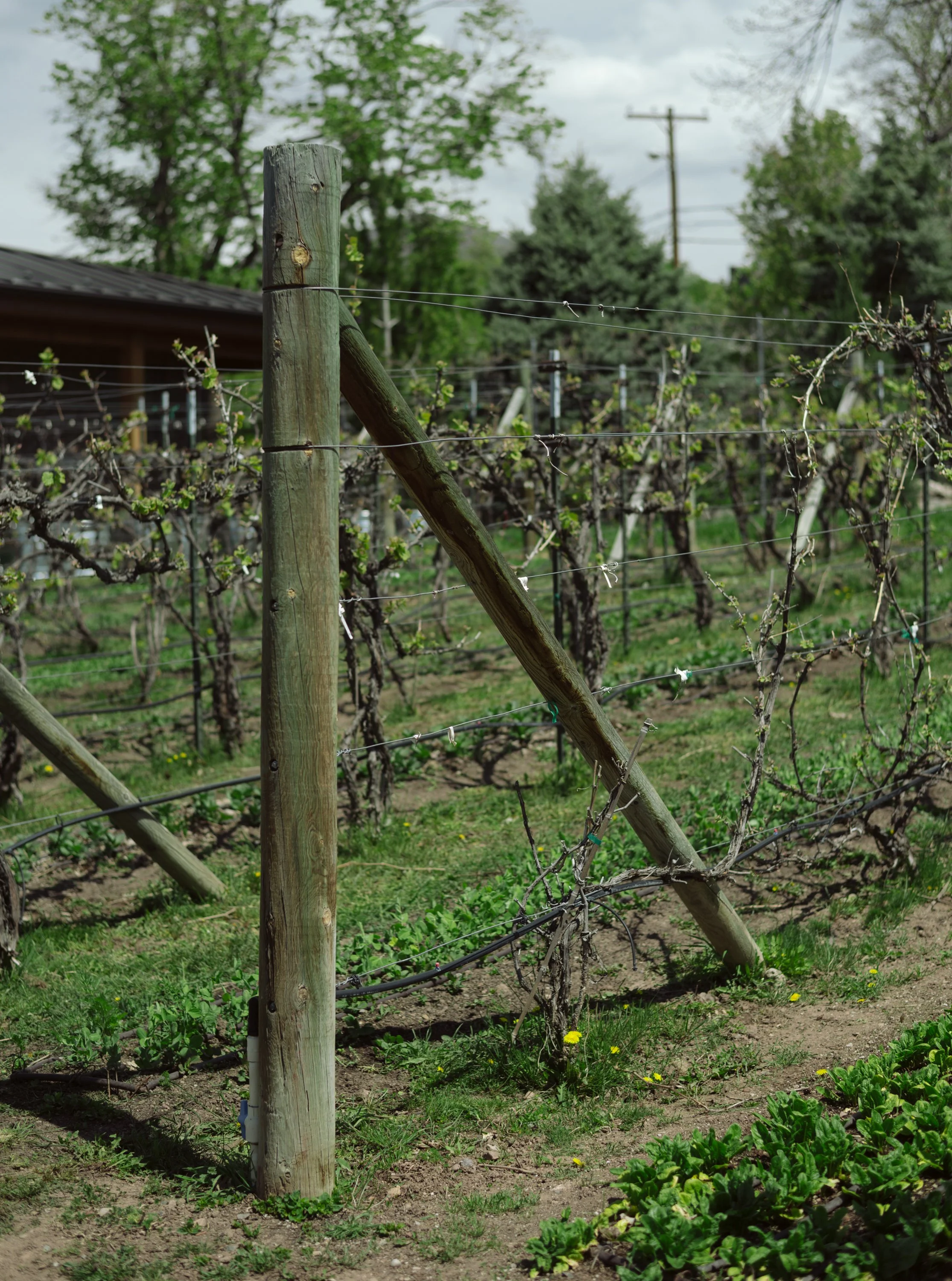
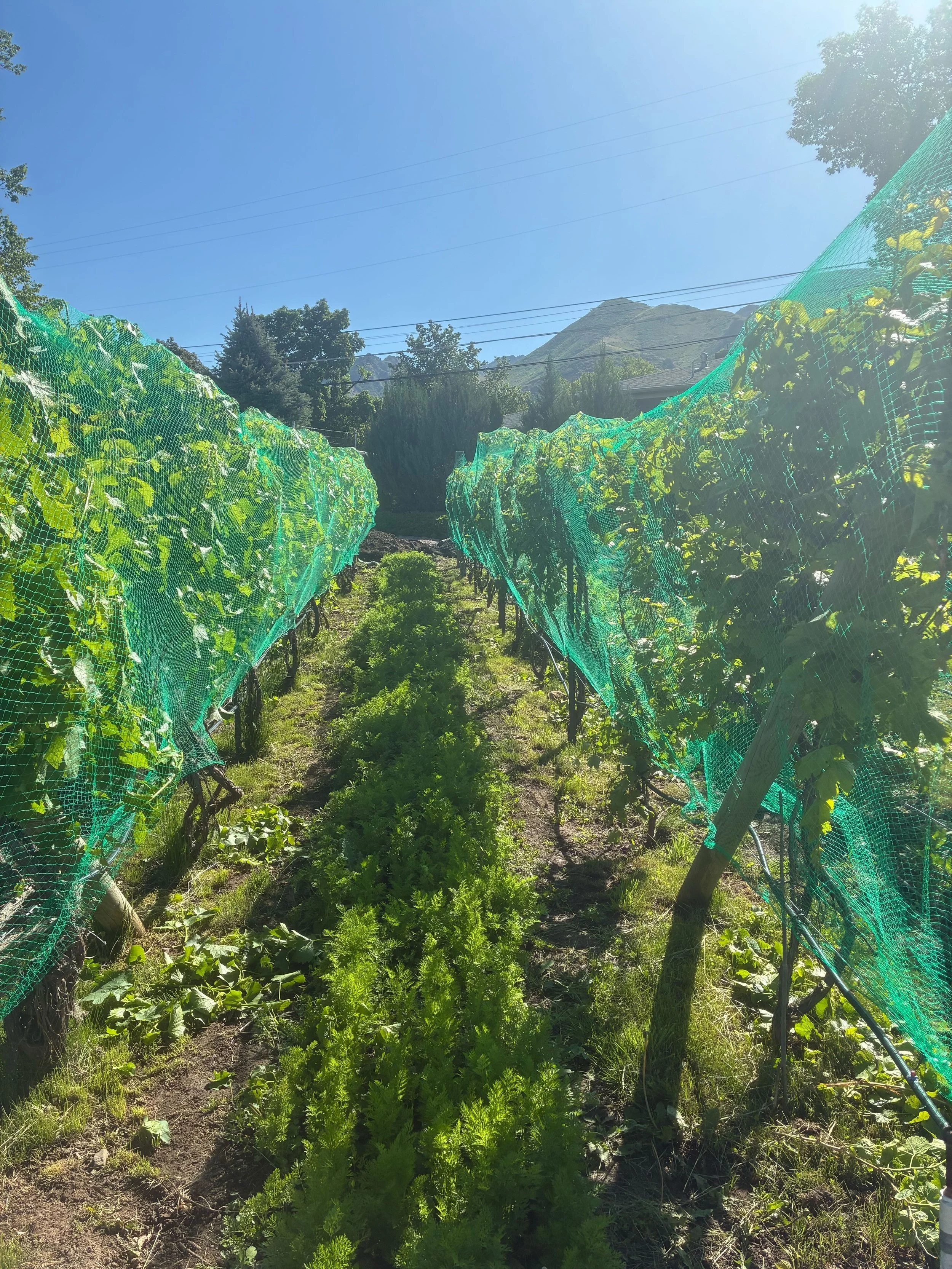
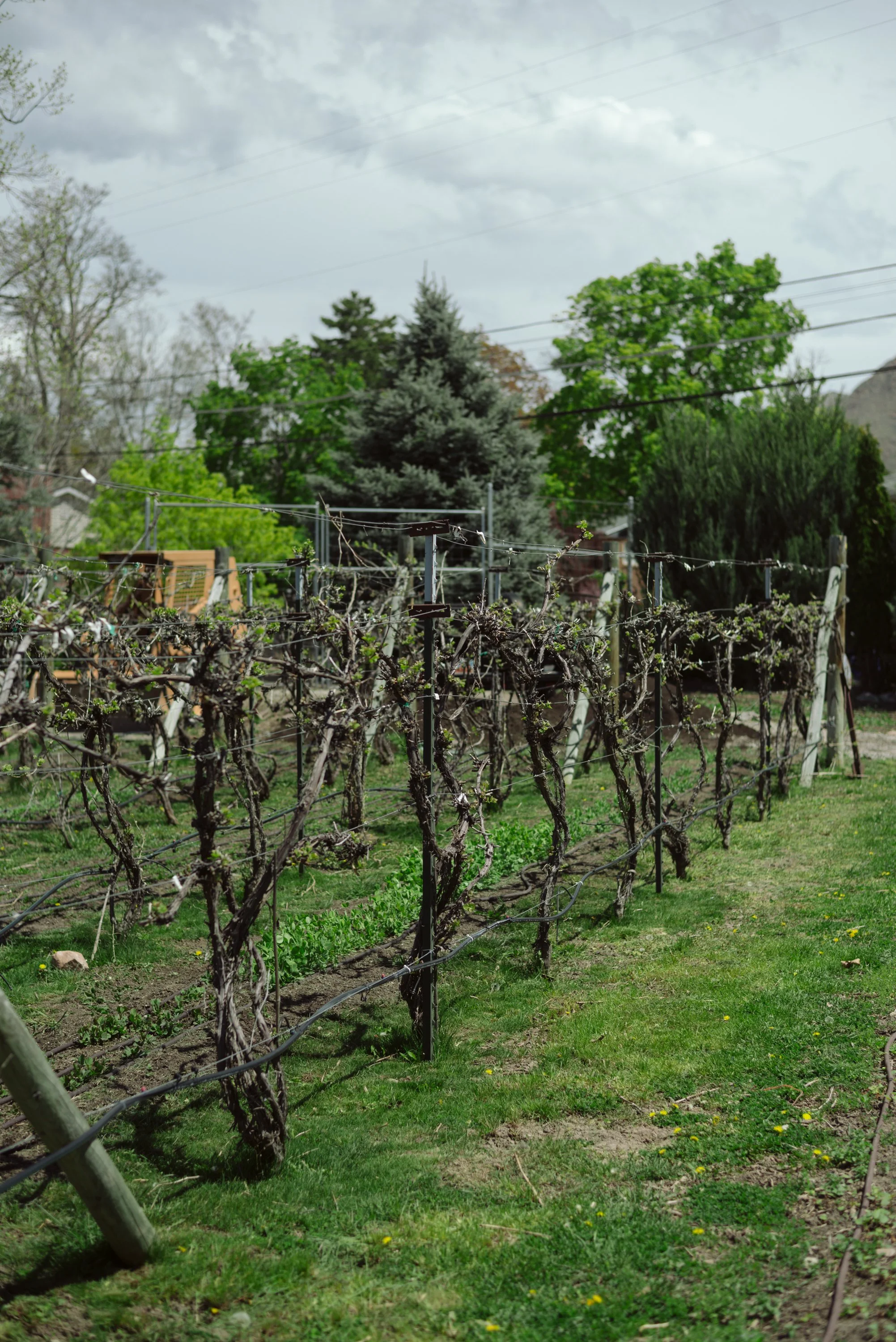
At Frog Bench Farms, our vinegars are created entirely from start to finish on the farm. The grapes are grown and hand harvested from our 12-year-old vineyard in Salt Lake City, then pressed and fermented into our own house wines before being slowly transformed into small-batch vinegars.
This traditional process allows the true character of the grapes to shine through, resulting in vibrant, complex vinegars with natural depth and acidity.
Because our vinegars are unfiltered and alive, you may notice natural sediment or a cloudy solid forming in the bottle. This is known as the “mother of vinegar,” a living culture of beneficial acetic acid bacteria responsible for transforming wine into vinegar. The presence of a mother is a sign of a traditional, naturally fermented vinegar.
These vinegars add bright acidity and complexity to dressings, marinades, cooking, cocktails, or as a finishing splash over vegetables, grains, and meats.
Our Vinegar-Making Process
Our vinegar begins in the vineyard. Grapes are hand harvested with care, washed, and pressed to create wine using traditional fermentation methods. Once the wine is complete, it becomes the base for vinegar production.
To start a batch, wine is combined with existing vinegar and active vinegar mothers inside large glass fermentation vessels. These mothers contain naturally occurring acetic acid bacteria, which convert alcohol into acetic acid in the presence of oxygen.
The vinegar ferments slowly for approximately three months in a warm environment. During this time we carefully monitor the batches, stirring them and maintaining proper conditions to encourage healthy fermentation. As the vinegar develops, new mothers often form at the surface.
Before bottling, each batch is tested to ensure it meets proper food safety standards, including acidity above 4% acetic acid and minimal residual alcohol. Once ready, the vinegar is bottled by hand and stored away from direct sunlight to preserve its color and flavor.
The result is a bright, balanced vinegar crafted entirely on our farm from grape to bottle.
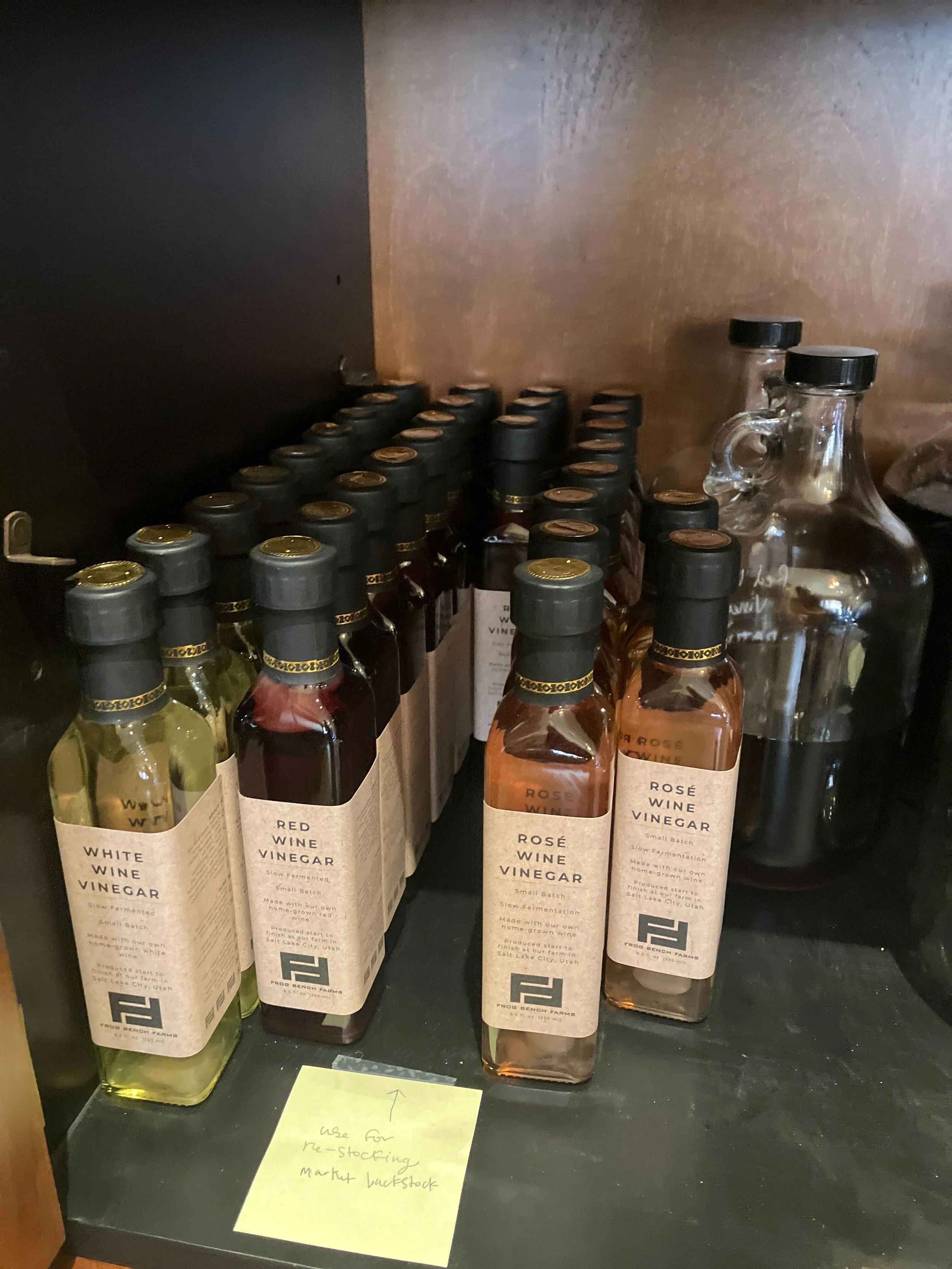
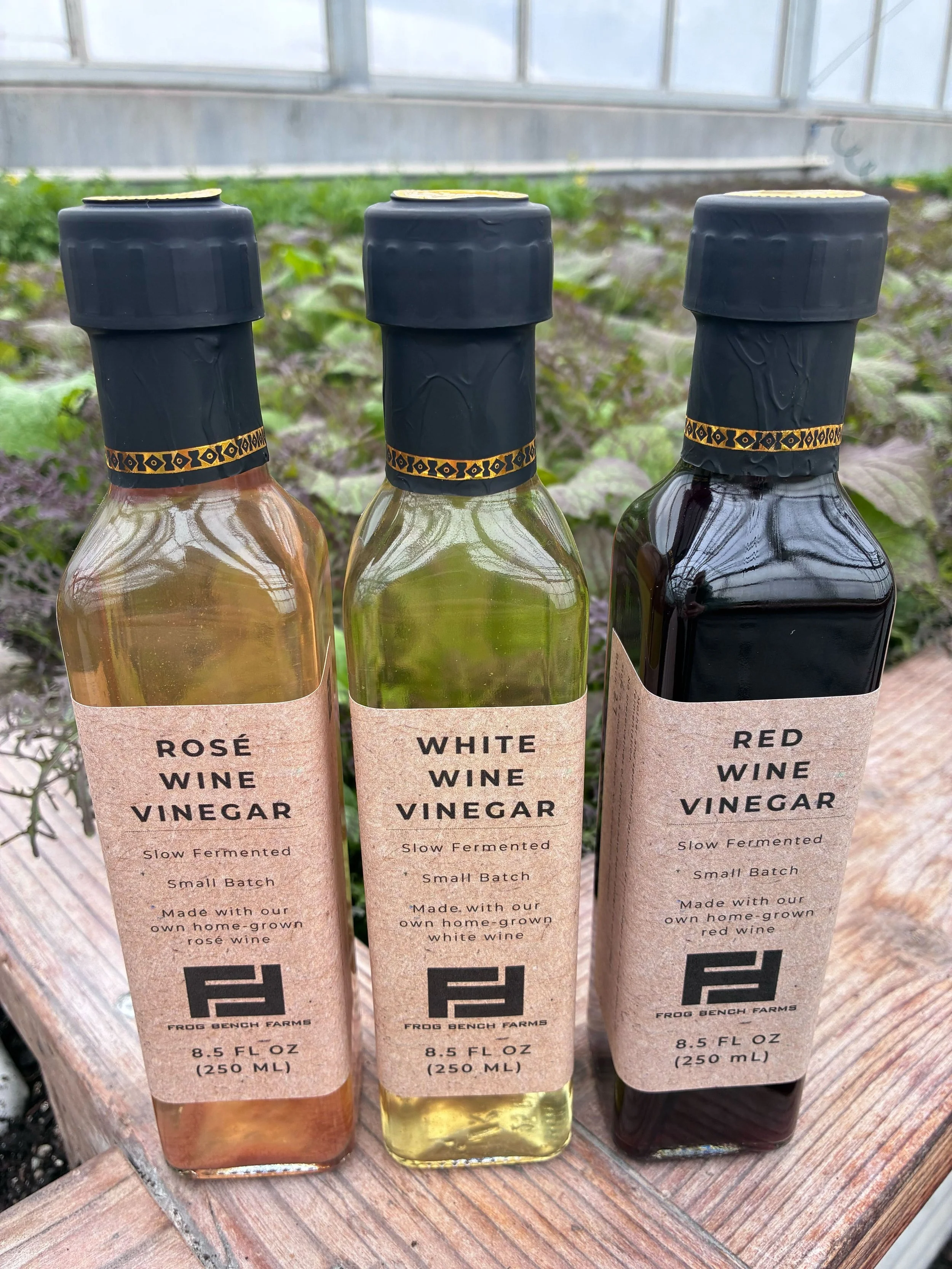
Red Wine Vinegar
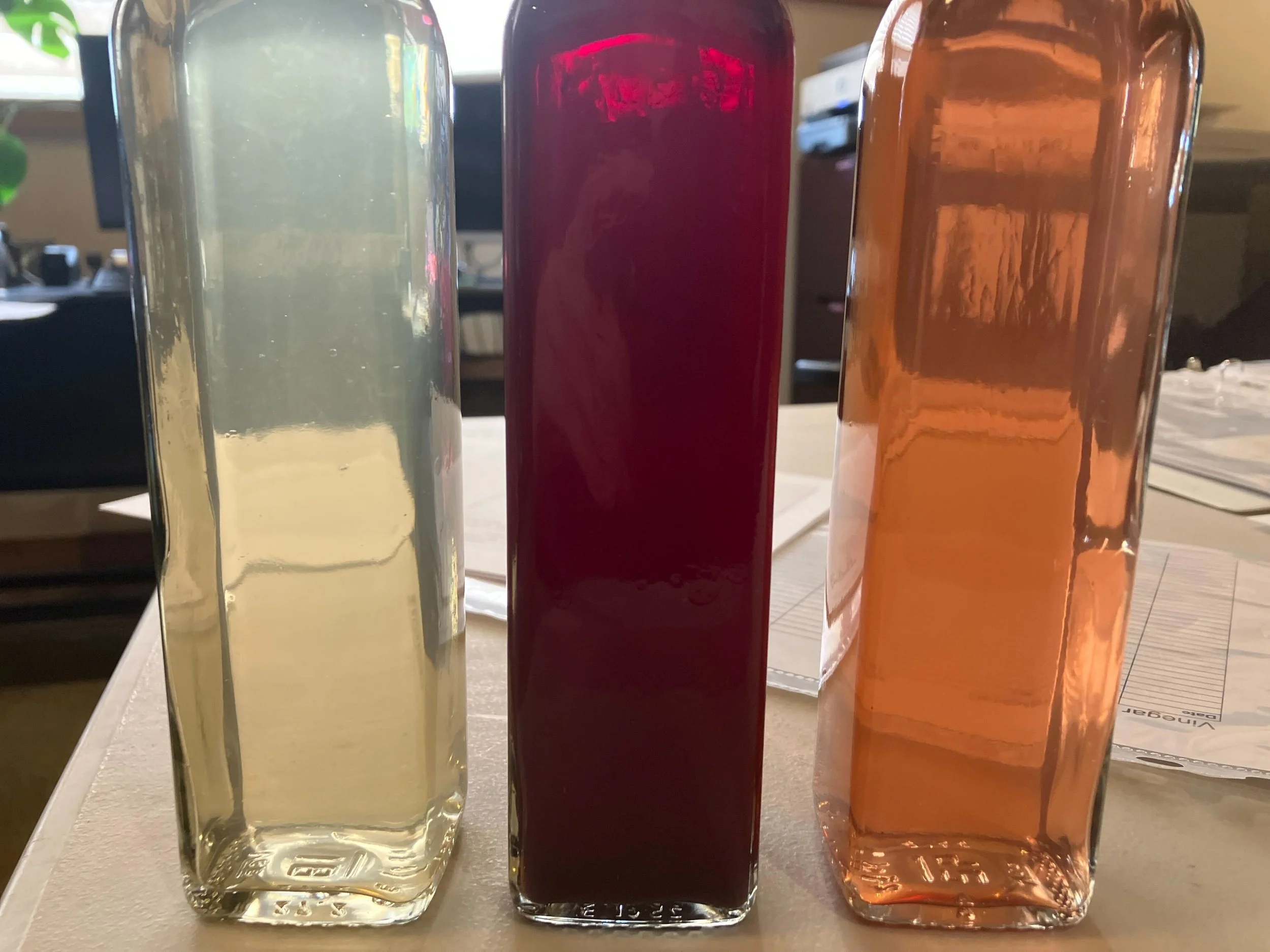
Made from our field blend of Cabernet Franc and Noiriet wines, this vinegar has a deep ruby color and bold flavor. It adds richness to vinaigrettes, roasted vegetables, braises, and sauces.
White Wine Vinegar
Crafted from wines made with Sauvignon Blanc, Chardonel, or Riesling grapes, this vinegar is crisp and bright with delicate fruit notes. Perfect for light vinaigrettes, seafood dishes, and pickling.
Rosé Wine Vinegar
Produced from our Chancellor rosé, this vinegar offers a balanced acidity with subtle berry notes and a beautiful blush hue. It works wonderfully in salads, marinades, or even in refreshing drinks.
Vineyard Byproducts
The vinegar process also allows us to utilize several other unique grape products created during the growing and fermentation seasons.
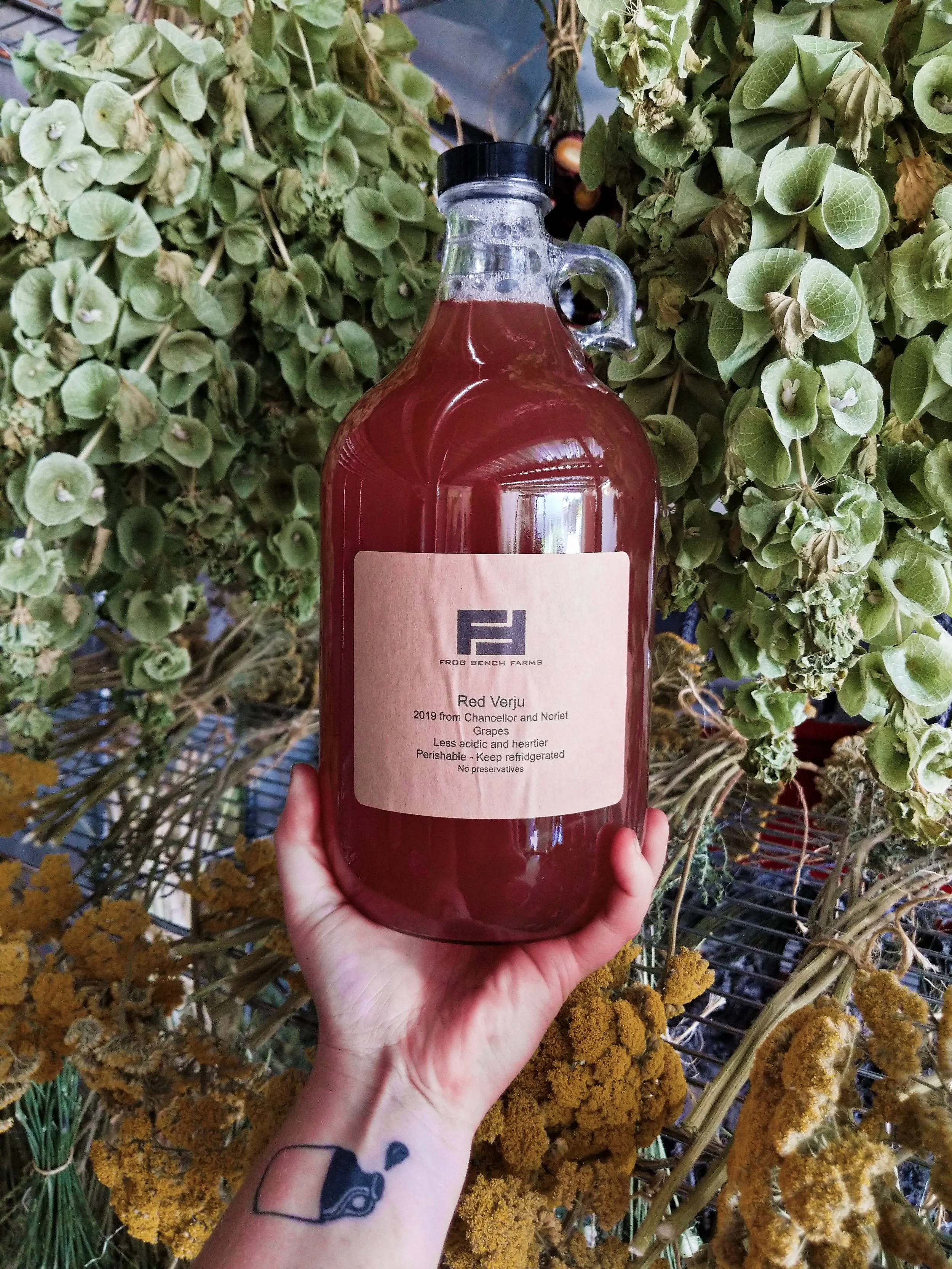
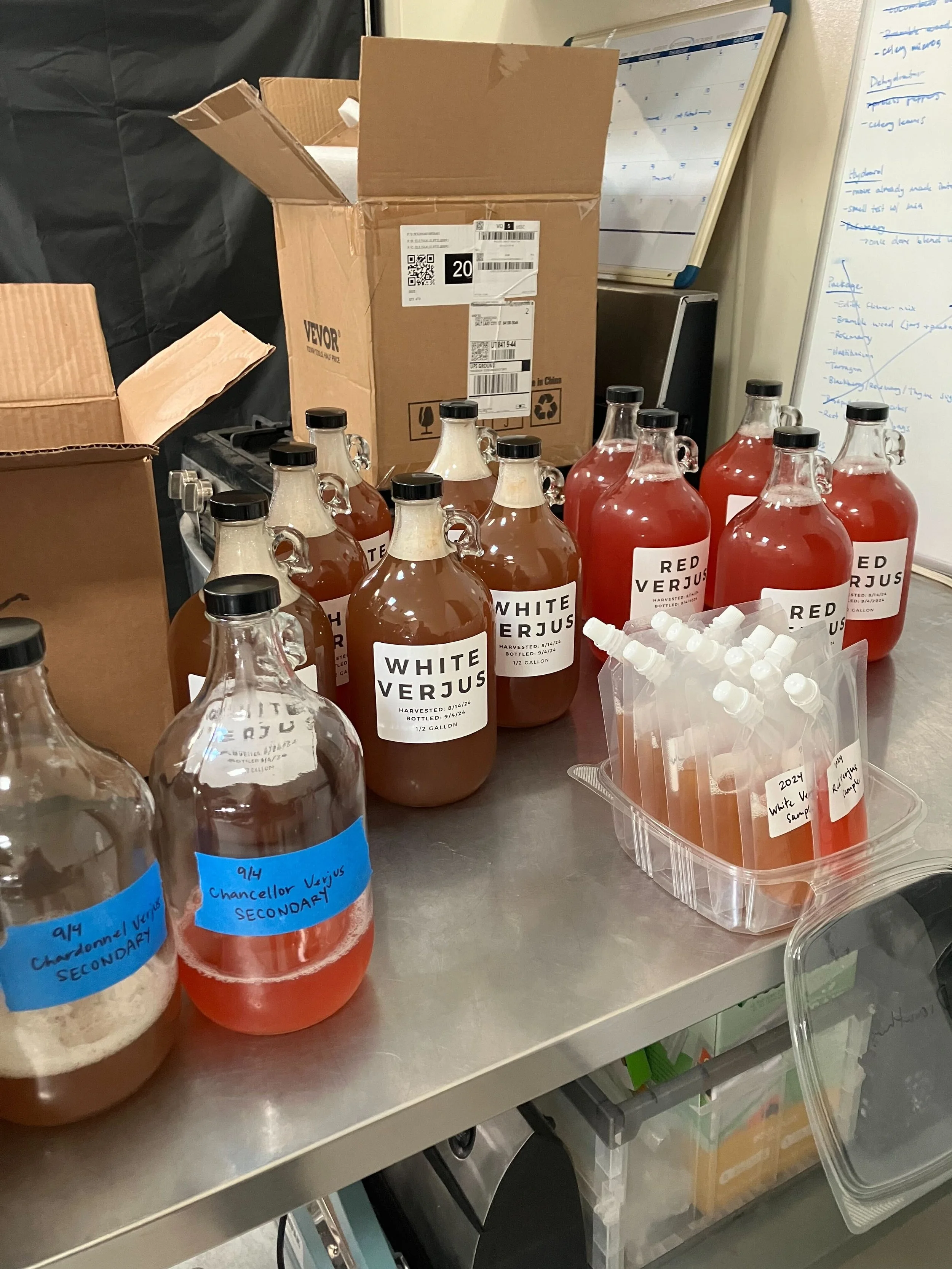
Verjus
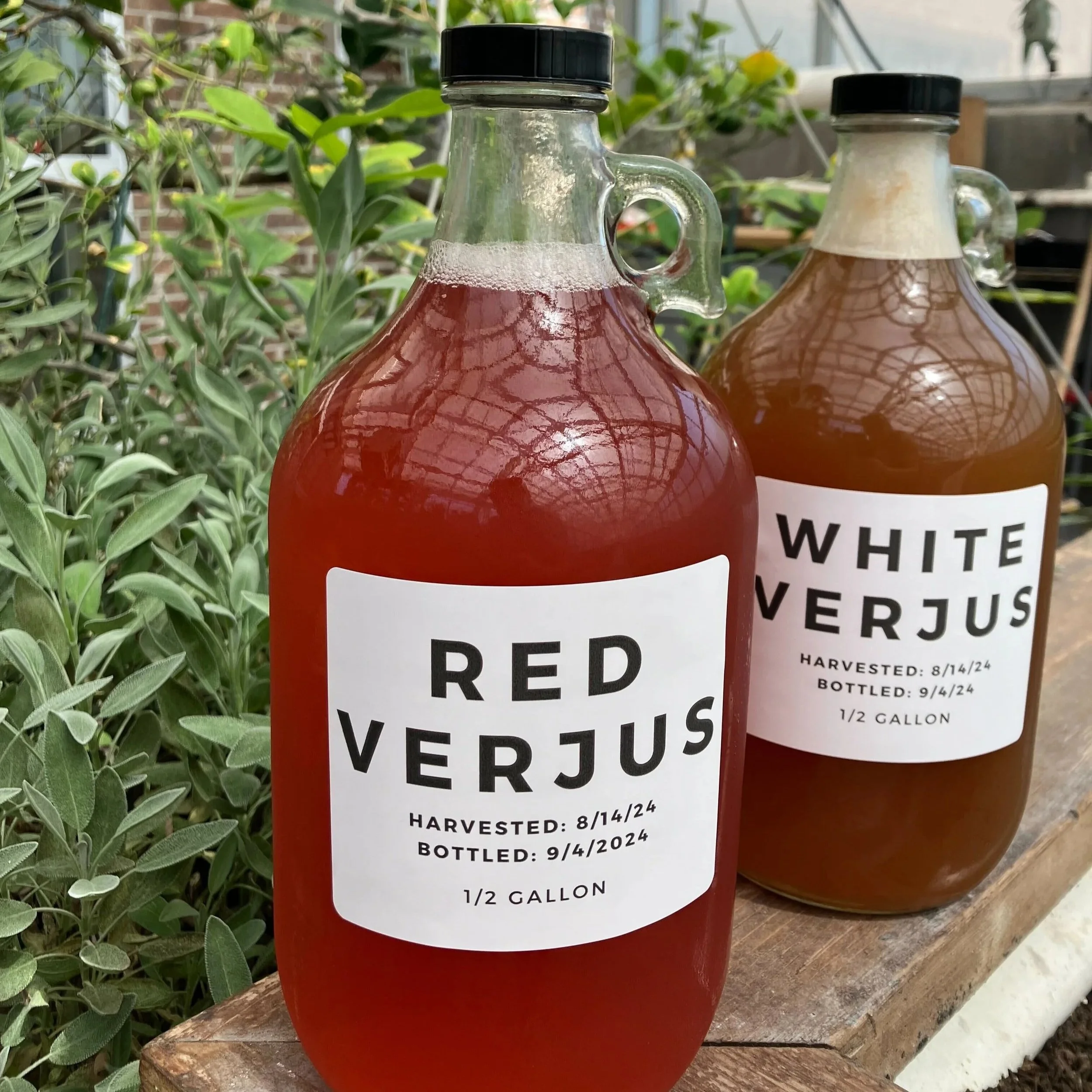
Verjus is the juice pressed from young, unripe grapes, typically harvested early in the season when thinning the vineyard. The juice is bright, tart, and gently fruity with lower acidity than vinegar.
Verjus is traditionally used in cooking as a milder alternative to vinegar or lemon juice, adding acidity to sauces, dressings, and drinks without overpowering other flavors. It can also be enjoyed on its own as a refreshing drink.
The Vinegar Mother
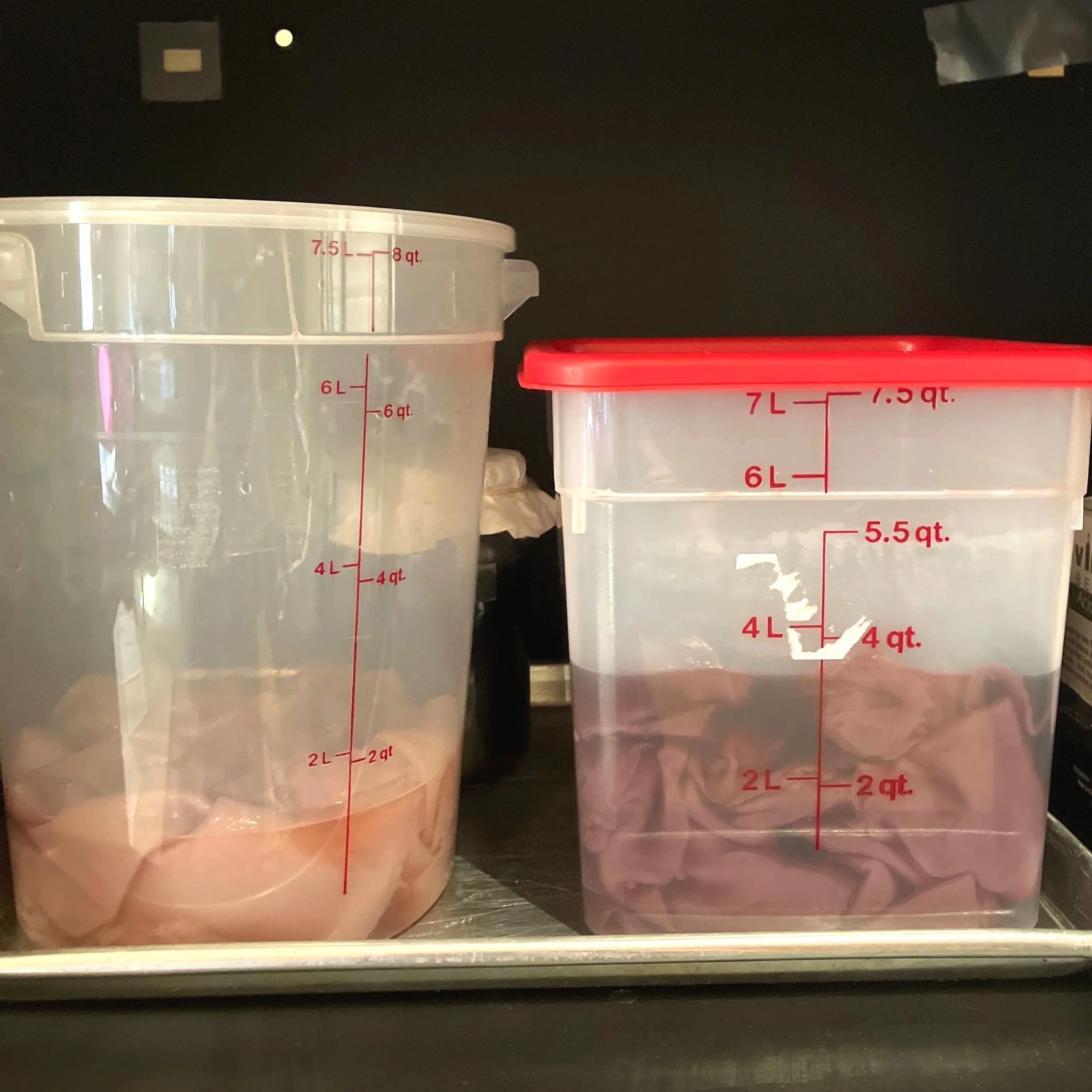
The mother of vinegar is a natural byproduct of fermentation. It appears as a soft, gelatinous disk floating on the surface of the vinegar and is composed of cellulose and living acetic acid bacteria.
While it may look unusual, the mother is a sign of active fermentation and living vinegar. These cultures can also be used to start future vinegar batches.
Grape Must
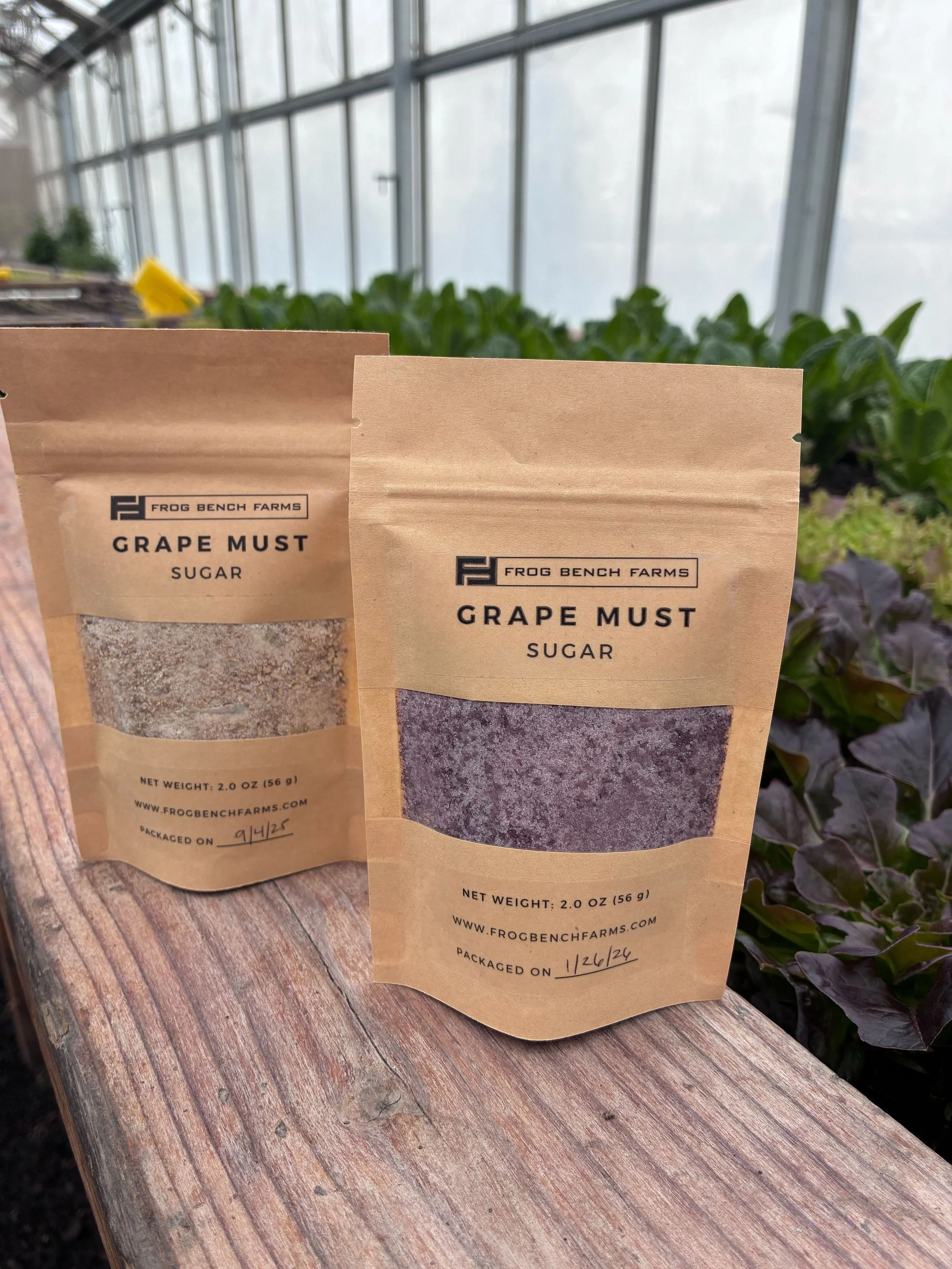
Another byproduct of our wine and verjus production is grape must, which we freeze dry to create a vibrant culinary ingredient.
Grape must is the sediment left behind after pressing grapes for verjus and wine. Once freeze dried, it becomes a flavorful powder with a bright, tart, grapey flavor and subtle fermented notes.
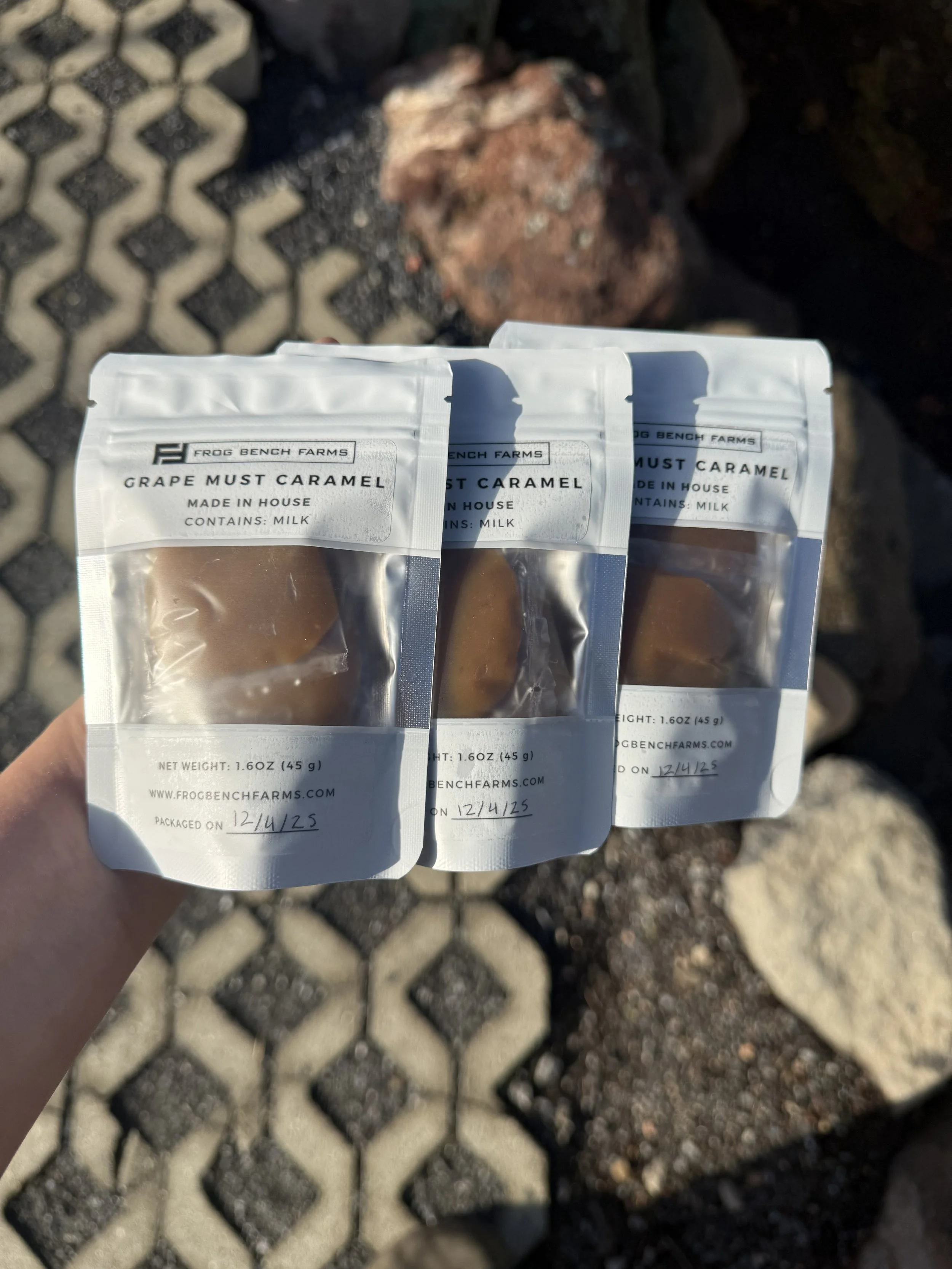
On the farm, we use this ingredient to create grape must caramel, where its natural tartness helps balance the rich sweetness of caramel. The result is a deeply flavorful caramel with a subtle fruity acidity.
Grape must can also be sprinkled into sauces, dressings, desserts, or drinks to add brightness and depth.
From Vineyard to Bottle
Our vinegars represent a full-circle approach to farming and fermentation. By transforming grapes into wine, vinegar, verjus, and grape must, we are able to utilize the harvest in multiple ways while capturing the unique flavors of our vineyard.
Every bottle reflects the work that begins in the soil and continues through careful fermentation, patience, and craftsmanship.